25% Lighter, Up to 30% Cost Reduction
A New Milestone in Module Structural Innovation
As the photovoltaic industry enters a new phase of intense competition, true differentiation no longer lies solely in cell efficiency, but increasingly in structural and material innovation at the foundational level.
As the New Year approaches, Q-SUN Solar has upgraded its composite material photovoltaic module frame solution to Version 2.0, building upon its existing technological foundation. The enhanced solution delivers multiple breakthroughs in weight reduction, cost efficiency, and long-term reliability, offering a more practical and forward-looking upgrade path for today’s highly competitive and cost-pressured solar market.
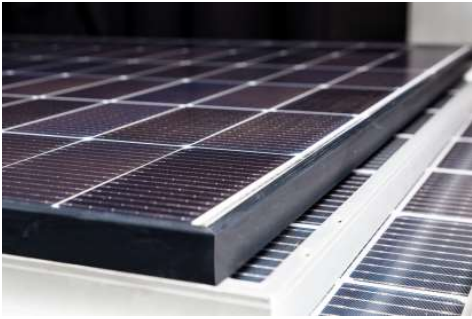
Breaking the Dependence on Aluminum, Redefining Module Boundaries
For years, aluminum frames have been the industry standard. However, amid raw material price volatility, mounting decarbonization pressure, and the growing demand for system-level cost optimization, the limitations of traditional metal frames are becoming increasingly evident.Q-SUN believes structural innovation will become a decisive factor in the next stage of module competitiveness.The newly released composite frame is developed using TÜV-certified GFRP technology. Its core material, GF-PU, is manufactured through a controlled continuous production process, delivering consistent quality and production stability
This represents not merely a material substitution, but a fundamental upgrade in structural engineering philosophy.
Lighter, Stronger, Safer
Compared with conventional aluminum frames, the new composite frame delivers:
▪ Approximately 25% weight reduction
▪ Up to 30% lower initial material cost
▪ Significantly reduced carbon footprint at GW-scale deployment
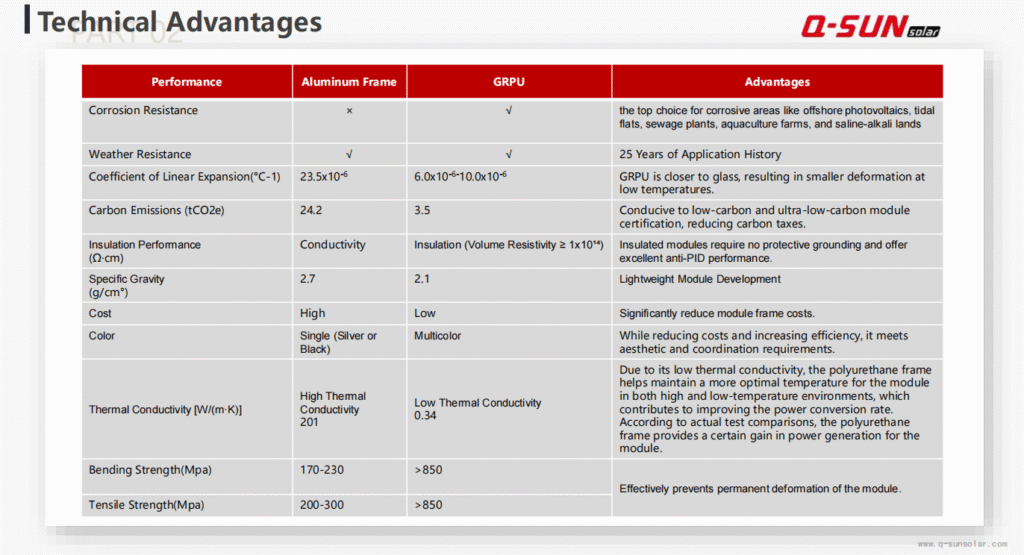
The lightweight design reduces transportation and installation costs while lowering structural load on mounting systems, bringing tangible benefits to both utility-scale and distributed solar projects.From a safety and reliability perspective, the material offers inherent electrical insulation, eliminating the need for additional grounding hardware and effectively mitigating potential-induced degradation (PID), ensuring long-term stable power generation.
Laboratory data show a Comparative Tracking Index (CTI) of up to 600V and a Limiting Oxygen Index (LOI) exceeding 56%, demonstrating excellent flame-retardant performance and enhanced safety margins.
Engineered for Wind and Snow Resistance in Extreme Environments
In mechanical performance tests, the composite frame withstands 5400Pa (downward) and 2400Pa (upward) loads through multiple cyclic tests. Structural stability has been validated through CAE mechanical simulations.Notably, its coefficient of linear thermal expansion closely matches that of glass, reducing thermomechanical stress during temperature cycling, minimizing microcrack risks, and extending module lifespan.The material also demonstrates excellent weather resistance, withstanding damp heat, UV exposure, salt mist, ammonia, and chemical corrosion — making it suitable for coastal, agricultural, desert, and industrial environments.
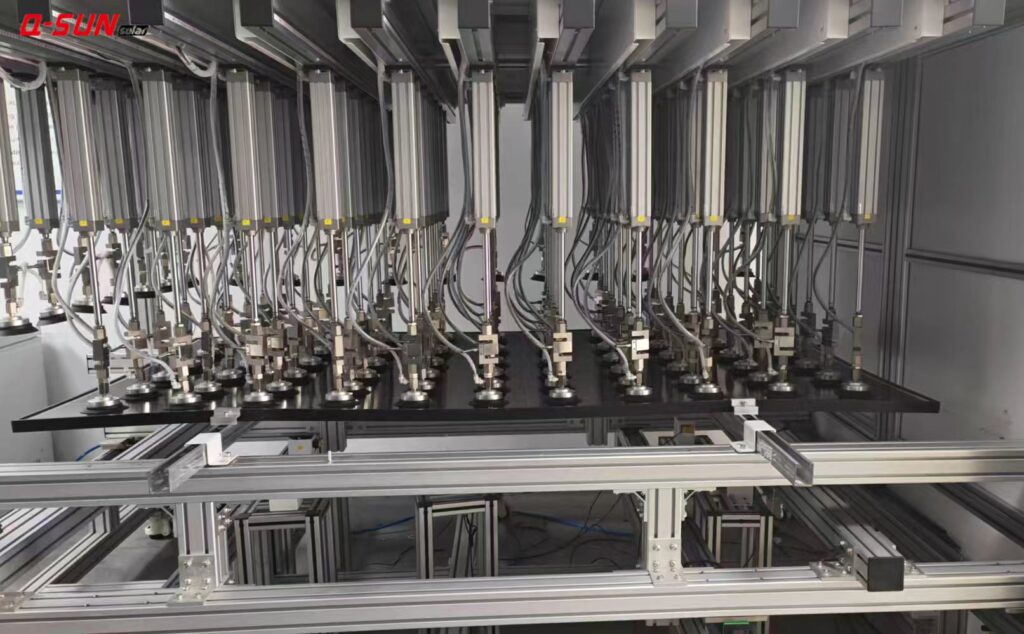
Sustainable Manufacturing for a Low-Carbon Future
In the global transition toward sustainability, material innovation is not only about performance — it is also about carbon reduction.
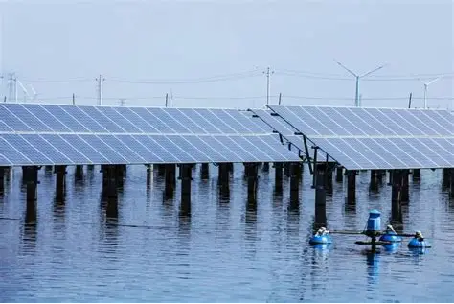
Compared to metal frames, the composite solution offers significant lifecycle carbon emission advantages. The design also incorporates recyclability, enabling material recovery through established mechanical and chemical recycling processes.The composite frame has obtained TÜV certification and successfully passed key tests including mechanical load, corrosion resistance, PID protection, and fire safety assessments.Structural innovation defines the next generation of competitiveness.From cell efficiency to system solutions, from material innovation to intelligent manufacturing, Q-SUN believes that true leadership is not merely about higher wattage — it is about redefining every structural detail.
Looking ahead, Q-SUN will continue advancing module lightweighting, reliability enhancement, and low-carbon innovation — delivering safer, more efficient, and more sustainable energy solutions to global markets.